Secondhand Leather Goods: What to Check
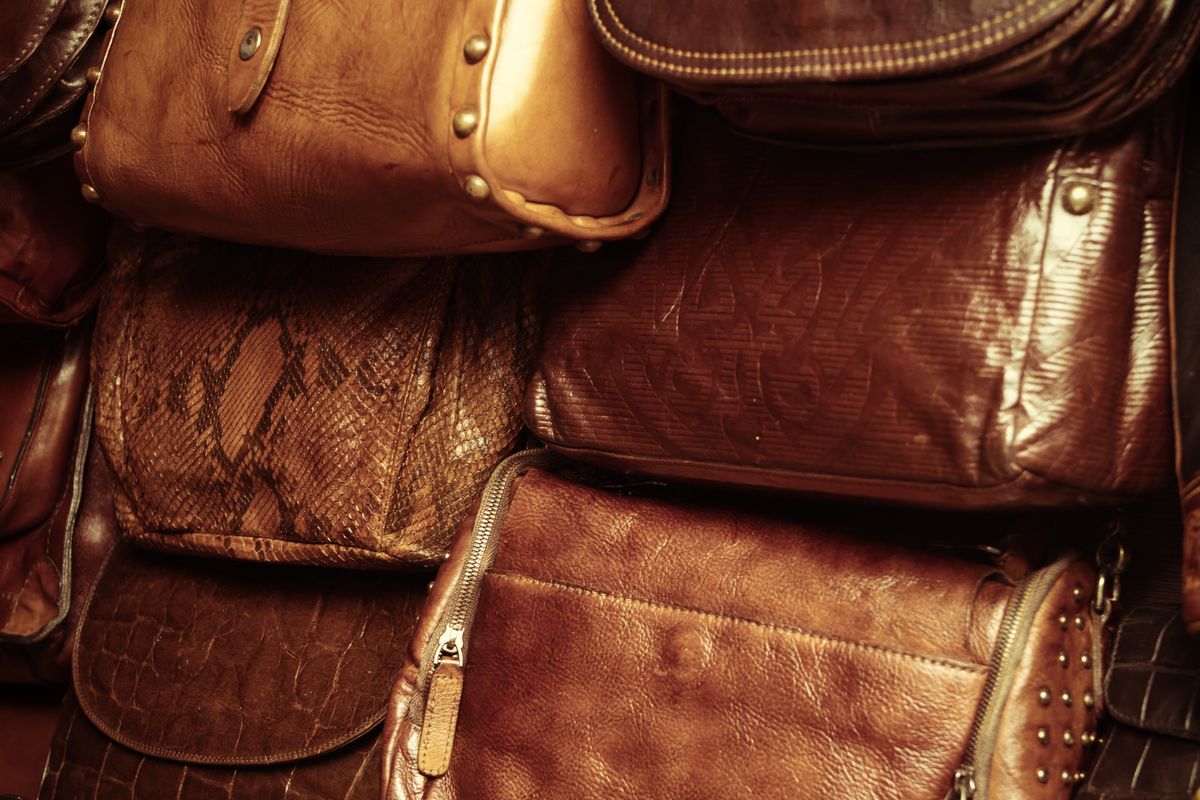
Secondhand leather is priced on condition, and condition is decided in six places — not in the photographs the seller chose. Ten minutes with the piece in hand tells you more than the listing ever will, because leather records use honestly: every flaw below has a specific meaning, and a few of them are unfixable.
The inspection checklist
Run the checks in this order — the early ones end visits fastest:
| Check | What you see | What it means |
|---|---|---|
| Corners | Edge paint worn through to bare, fuzzy stacked leather | High cycle count; the corners take every set-down. Cosmetic, repairable |
| Base | Rounded, softened base panel; abraded feet on a structured bag | Years of standing wear. Cosmetic unless the board inside is cracked |
| Hardware | Plating worn to base metal on zipper pulls and rings | Heavy use on the highest-touch points. Scratches alone are normal aging |
| Zipper | Catches, skips, or splits under gentle pressure | Worn slider or damaged teeth; a replacement is quotable but real money |
| Lining | Sticky, flaking, or powdering interior fabric | Polyurethane lining degradation. The costliest surprise on this list |
| Handle roll | Cracking across the rolled handle, deep darkening with stiff spots | Hand oils plus flex fatigue; a cracking roll is the next failure point |
| Frame | Bag won’t close or sit flat; rim distorted | Stored without stuffing. Serious on rigid frames, minor on soft bodies |
| Smell | Sour, chemical, or persistent mustiness | Water damage or early rot that has penetrated the leather |
The two findings that end negotiations
A deteriorating lining is the expensive one. Polyurethane linings from certain decades hydrolyze — they turn tacky, then flake, and the degradation spreads to everything stored inside. Replacing a lining is a full disassembly, which costs more than most mid-market bags are worth. Powdering, reddish dust on vegetable-tanned areas is red rot: the tannins have failed and the fibers are breaking down. There is no cure; the leather grading basics explain why poorly tanned hide starts down this road from day one. Both findings mean the price should approach zero, and usually the piece should.
What is routine wear, not damage
Plating wear on a replaced-friendly zipper, scratched hardware, worn edge paint and darkened handles are history, not pathology — see what hardware names are worth for the parts that can be swapped, and wallet construction for why edge finishing fails before the leather does. A reputable leather worker quotes re-dyeing, edge work and hardware by the line item, so those findings become bargaining numbers.
After the inspection
Pass the checklist and the piece likely has decades left, because older production often carries thicker hides than current equivalents. Conditioning is the first order of business: start with conditioning without darkening to restore flexibility without staining, and treat suede finds with the care route in suede care basics before any wear. Then the math gets to work — a decade-old bag at a third of retail, inspected clean, is usually a better cost-per-wear entry than anything new in the category.
FAQ
- Is a musty smell a dealbreaker?
- Usually. Odor that survives airing out has penetrated the leather and lining, and mildew in particular returns in humid weather. Unless the price reflects a restoration you want to fund, walk away.
- Can worn edge paint be repaired?
- Yes, cheaply. Edge paint can be sanded back and re-coated by any leather worker, so edge wear alone should lower the price, not end the negotiation.
- How much should flaws lower the price?
- Price the repairable separately from the structural. Re-dye, edge work and hardware replacement are line items a leather worker will quote; lining replacement, red rot and frame distortion are reasons to keep shopping.