Judging Stitching Quality on Bags and Clothes
The conclusion first
- Stitching is the only construction detail you can judge without a spec sheet.
- Fabric weight hides behind adjectives, leather grades hide behind marketing, but a seam sits in plain sight — in the product photos, on the shelf, in your hand.
- Reading it answers the question no hang tag will: whether the maker was given time to finish the job.
Drawn from the opening of this entry.
Stitching is the only construction detail you can judge without a spec sheet. Fabric weight hides behind adjectives, leather grades hide behind marketing, but a seam sits in plain sight — in the product photos, on the shelf, in your hand. Reading it answers the question no hang tag will: whether the maker was given time to finish the job.
Density: even beats dense
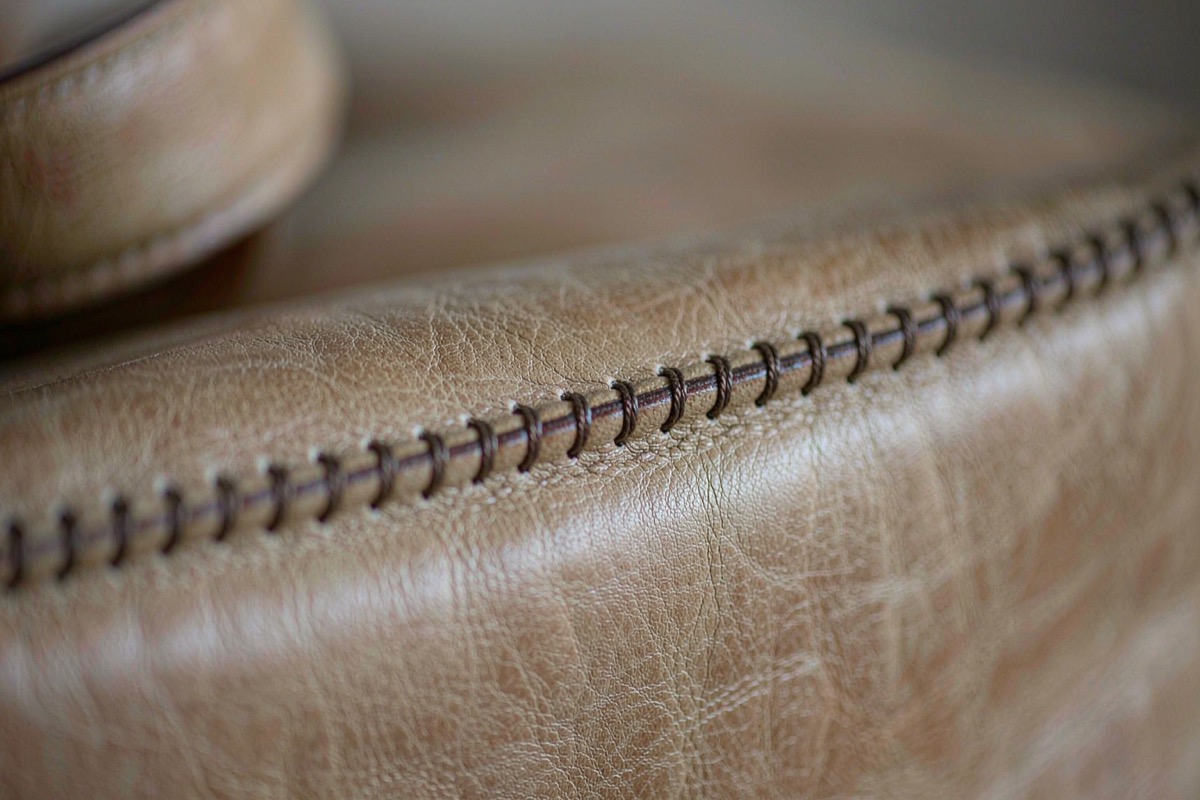
Closer stitches usually mean a slower machine, finer thread and a seam that holds its line under load. Wide, sparse stitches stretch out of alignment, and one snag can pull a whole run crooked. On leather, though, density has a ceiling: every stitch is a needle hole, and holes packed too tightly can weaken the hide along the seam. What predicts quality is evenness — stitch length that stays constant around corners, along zipper tape and through doubled layers. Uneven stitch length means the machine was pushed faster than the material allowed.
Evenness is also what shows in photographs, which makes it one of the few quality checks available before a parcel arrives. Zoom into a product image and follow a seam: a steady rhythm means a bench that let the machine work at its own pace. Stitches that lengthen around a corner mean the operator was steering the material by hand, and the seam will spend its life reminding you.
Density alone settles nothing. A dense, wandering seam loses to a sparser, steady one on any garment you will keep, because the steady one is the one that was planned.
Cloth and leather reward different strategies here, and the difference explains part of the price of good leather goods. A woven fabric tolerates dense stitching cheaply, so the bench buys strength with more needle passes. Leather charges for every pass — the hole is permanent — so the bench buys strength with thread size, spacing and reinforcement placed exactly where the load lands. Neither approach is a shortcut; they are answers to different material budgets.
Lockstitch holds, chainstitch can unravel
Turn the piece over if you can. A lockstitch interlocks two threads inside the seam; it is the standard on quality bags, wallets and shirting, and it fails locally — one broken thread stays put. A chainstitch loops a single thread through itself, runs faster, and can unravel down the seam if an end lets go, which is why chainstitched denim hems walk open when a thread snaps. Chainstitch is a legitimate choice in workwear, where speed matters. On a handbag seam or a shirt side seam, though, lockstitch is the safer default, and its absence is worth a question.
The failure modes are not symmetric. A broken lockstitch loses one stitch and the seam keeps its strength. A released chainstitch can lose a whole run from one end, sometimes from ordinary handling rather than any load. That asymmetry, not snobbery, is the reason the standard exists.
Load paths and where they fail
Stress points tell you more than flat runs. Look where straps meet the body, where handles anchor, at pocket corners and belt loops. A short, dense run of stitching crossing the seam — a bar tack — is the classic reinforcement, and a second stitch line beside the first does the same work. A bag whose handle anchors carry a single sparse line of stitching is a bag whose handles will go first.
Map the load paths before you count stitches. A crossbody strap turns the weight of everything you carry into a pull on four anchors. A tote’s handles turn every stair climb into another repetition. Flat runs rarely fail; the corners where direction changes are where load concentrates, and that is where reinforcement belongs.
A skipped stitch at an anchor is worse than the same fault on a side seam, for the same reason. Every stitch on a load path carries a share of the weight, and each missing stitch hands its share to its neighbours.
The inside tells the truth
Finishing shows at thread ends. A few tails left untrimmed inside a lining suggest a rushed bench; a scattering of them per seam suggests worse. Interiors get less attention at inspection, so they are the honest half of any bag or garment. The same reading applies to handbag hardware, which rewards the same inside-out inspection.
Zipper tape is the quiet middle ground between lining and show side. The tape sits on the inside, it carries the elements, and its stitching gets the same shortcut treatment the lining gets. Wherever the inspection is thinner, the work is thinner; the inside is simply where the masking stops.
When stitching is a reason to return
Separate cosmetic from structural. Wavy topstitching that stays evenly spaced is a taste problem; skipped stitches, thread loops sitting on top of the fabric, puckered seams on woven cloth or a seam shedding stitches out of the box are construction failures, and none of them improve with age. On bags, anything at a strap anchor, zipper tape or handle base is structural by definition — that is where load travels.
A cosmetic wobble at a corner where nothing pulls is a negotiation over taste, not durability. Structural faults do not negotiate; they are construction, not appearance, and no break-in period repairs them. If the flaw sits on a load path, return the piece. If it sits where nothing pulls, you are deciding whether the look bothers you, which only you can price.
The two-minute inspection
None of this requires training — a phone flashlight and two minutes cover it. Run one finger along the main seam, turn the piece for the underside, check the anchors, look inside for tails. After three garments the routine becomes how you see seams, and the wobbly ones start announcing themselves across a shop floor.
Work the same routine on pieces you already own and trust. A seam you know is good calibrates your eye for the ones that are not, and the comparison teaches faster than any list of rules. The bench that built your best bag set the standard; every inspection after that is measurement against it.
The same discipline applies at the listing stage: the spec-sheet-first way of reading a product listing catches most of these problems before the parcel arrives, and the same seam logic decides the lifespan in wallet construction.
FAQ
- How can I tell lockstitch from chainstitch?
- Look at the underside: a lockstitch shows two interlocked threads and stays put when one breaks, while a chainstitch shows a looped single thread that can unravel along the seam if an end lets go.
- Is more stitches per inch always better?
- No. Dense stitching holds a line well, but on leather every stitch is a needle hole, and holes packed too tightly can weaken the hide. Even, constant stitch length matters more than maximum density.
- Which stitching faults justify a return?
- Skipped stitches, thread loops on the fabric surface, puckered seams and any fault at a strap anchor or zipper tape. Those sit on load paths and will not improve with age.
Zipper swaps, relining, strap restitching and re-proofing priced against…
Lifetime is a term, not a promise. How bag warranties separate defects from…
Why a medium fits two sizes apart across brands, how to measure a garment that…
A secondhand leather inspection checklist: corners, hardware, lining, structure…