Suede Care: Brushes, Erasers and Waterproofing
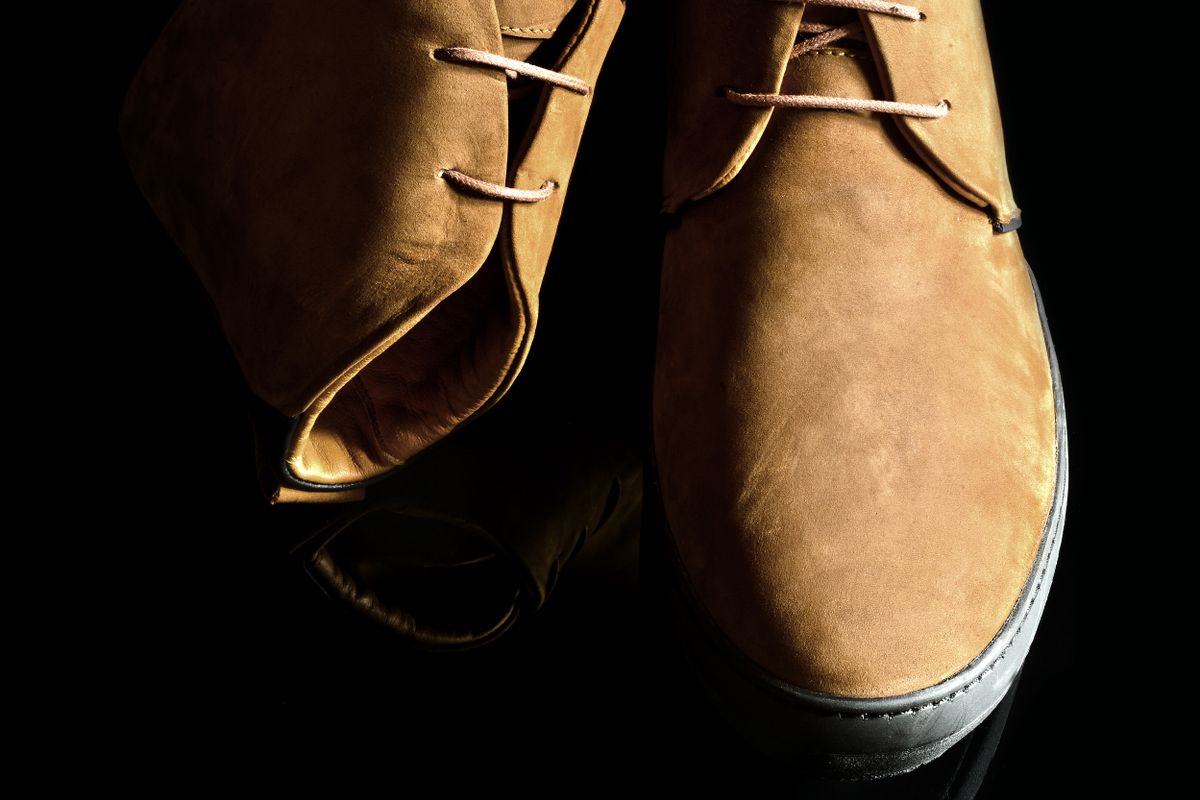
Suede is the flesh side of a split hide, buffed until the fiber ends stand up as nap. That structure is why it feels the way it does — and why the care rule writes itself: protect the nap, and everything else follows. Nearly all suede care is dry work. Water is a guest you invite rarely.
The dry routine comes first
Dry brushing after each wear removes the dust that would otherwise work down into the fibers and set as grime. Run a crepe brush in short strokes, one direction, then flip the direction to lift the nap back up. This takes twenty seconds and prevents most of what people later call stains.
For scuffs and shiny spots, a rubber eraser — natural rubber, or crepe rubber — rubbed lightly over the mark crumbles and lifts the matted fiber. Jason Markk, whose suede system pairs a natural-rubber eraser with a brush, documents the same sequence: brush first, erase with light pressure, brush the debris away and revive the nap. Light pressure is the operating word; scrubbing tears fiber ends off and leaves a bald patch.
Brush choice follows the job. A crepe-bristle or natural-bristle brush is the daily tool: stiff enough to lift dust, soft enough not to scar the nap. A brass-bristle brush is the corrective tool — it opens nap that has matted flat or gone shiny from wear, and on tough scuffs nothing else works as well. The trade-off is real: brass cuts harder, so on fine or velvety suede use it with a light hand, straight strokes, and stop as soon as the nap stands up again.
When you need liquid
Only after the dry routine fails. Even then, minimal liquid is the rule: a foam cleaner on a brush rather than water poured on the shoe, worked in small circles, blotted dry, brushed back up as it dries. Jason Markk’s own care notes are blunt about the risk — dyed suede is likely to bleed from any contact with water, and the brand recommends testing an inconspicuous area first because suede’s grades behave unpredictably. Nubuck takes the same routine with a lighter hand.
Waterproofing spray: useful, not invisible
A fluorochemical-free or PFAS-free spray such as Jason Markk’s Repel adds real splash resistance — the brand documents up to four coats on suede, each dried fully before the next. Apply two honest facts to that promise. First, no product fully waterproofs a porous material like suede; spray buys you a mist, not a downpour. Second, sprays usually darken the nap a touch and can change its hand — on pale suede the shift is visible. Spray a hidden patch, let it dry, and judge before committing the whole shoe. And do it in ventilated air, not over the kitchen table.
Storage beats rescue
Keep suede dry, brush it before it asks, and let wet pairs dry at room temperature away from radiators, which stiffen the leather underneath the nap. For where suede sits among the hides you might buy, see leather grades explained.
FAQ
- What is the difference between a crepe brush and a brass brush?
- Crepe rubber brushes lift dust and refresh the nap gently — the right default for regular care. A brass-bristle brush is more aggressive; it opens matted nap and works on stubborn shine, but used hard it can thin a delicate suede.
- Can I clean suede with water?
- Keep water as the last resort. Tap water can leave rings, and Jason Markk warns that dyed suede is likely to bleed on contact with water. Dry brushing and an eraser solve most marks with none of that risk.
- Does waterproofing spray change the color of suede?
- It can. Most sprays darken the nap slightly and alter its feel, and the change is hard to undo. Test on a hidden area first, and treat spray as splash protection — no product fully waterproofs a porous material like suede.