Coat Fabrics Worth Paying For
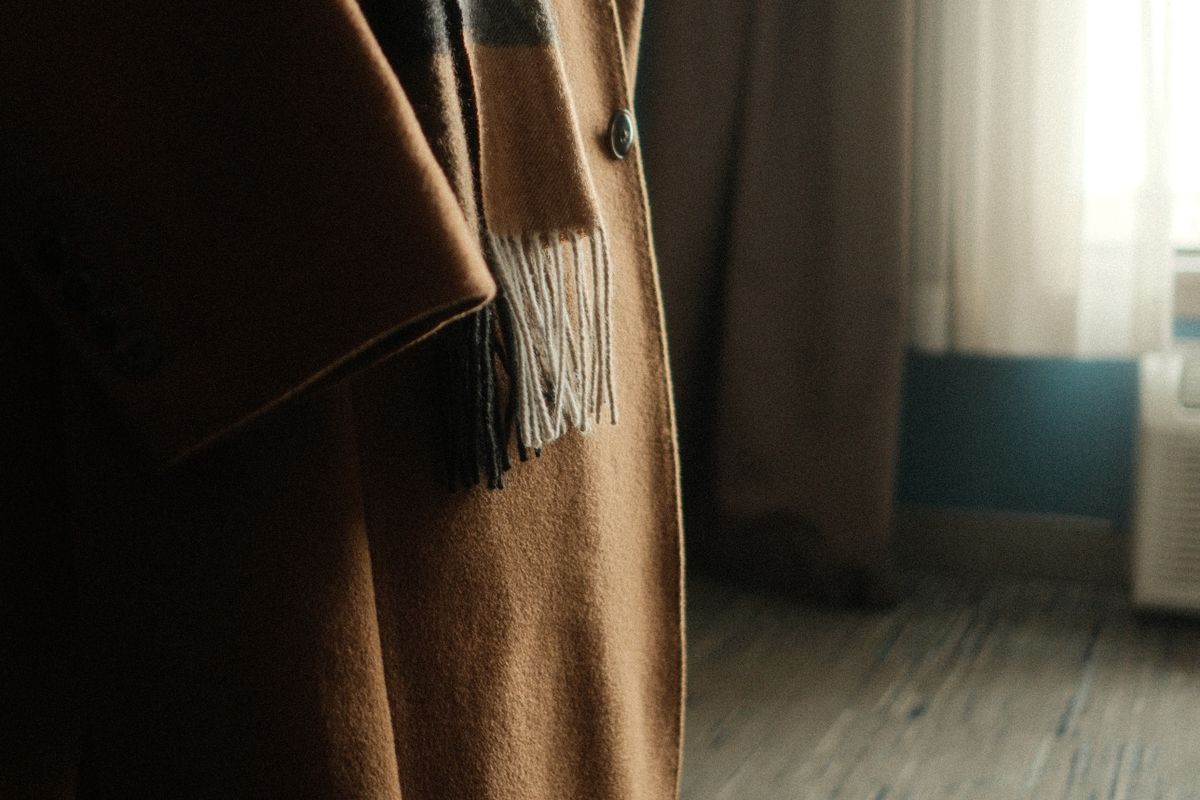
Coat fabric carries the whole purchase. The shell is the structure, the warmth and almost the entire lifespan of the garment — so the three numbers on the label deserve more attention than the silhouette. All three can be checked before you pay.
The Super number caps fineness, not quality
The “Super” scale on wool cloth is not marketing shorthand. ISO 18103 defines it: “Super” may only describe woven cloth of pure virgin wool, and each S value sets a maximum mean fibre diameter. Super 100s means 18.5 microns or finer, Super 110s 18.0, Super 120s 17.5, Super 130s 17.0, Super 140s 16.5 and Super 150s 16.0, each with a 0.25 micron testing tolerance. Up to 5 percent non-wool yarn is allowed for decorative effect.
The trade-off is mechanical. Finer fibre feels softer and drapes better, and it creases sooner and abrades faster. A coat works harder than a suit: it rubs against seatbacks, bag straps and scarves. Super 100s to 120s is where durability and hand feel meet. Cloth beyond Super 150s is a commission to handle gently, which is the opposite of what outerwear does.
Weight is the number coats live by
Tailoring houses spec serious overcoat cloth at 16 to 20 ounces per yard — roughly 540 to 680 grams per square metre. That mass is what makes a coat hang straight and block wind. Below about 12 ounces you are in topcoat territory: real garments, but a different tool for milder weather.
Weave and finish matter as much as raw weight. Melton is heavily milled until the weave nearly disappears, which makes it dense and wind-resistant. Tweed keeps an open, hairy texture and breathes. A tightly woven 500 gsm cloth can out-block a loosely woven 600 gsm one, so press two swatches together and hold them to the light.
Cashmere on the label means percentages or nothing
Labelling law in the US and EU requires every fibre to be listed with its percentage, in descending order. So a tag reading “wool and cashmere” with no figures is not a premium signal — it is a compliance failure. Buy from the brands that print 90/10 or 80/20 and can tell you why.
The blend itself is sound engineering. Wool gives a coat its spring and shape retention; cashmere adds softness and drape at the cost of strength. Pure cashmere coats are the classic victims of collar and cuff wear for exactly this reason — the same fibre-length logic that drives pilling in knitwear applies at outerwear weights.
The label checklist
Before paying for any coat, confirm four things:
- Super number or fibre grade — Super 100s–120s, or an honest plain “pure new wool” without fantasy numbers.
- Cloth weight — 16–20 oz for a true overcoat; lighter is a topcoat.
- Cashmere percentage — a printed figure, never “blend”.
- Finish — milled melton for wind, tweed for breathability, matched to how you actually dress.
A label that lists none of these is asking you to pay for the cloth a marketing team imagines. Everything else — the care the coat will need, the lining, the buttons — you can judge with your hands in the shop.
FAQ
- Does a higher Super number mean a better coat?
- No — it only means finer fibre. ISO 18103 caps Super 120s cloth at 17.5 microns and Super 150s at 16 microns, but finer wool creases more and wears out faster. For a coat worn over other layers, Super 100s to 120s is the durable sweet spot.
- What percentage of cashmere is worth paying for in a coat?
- Around 10 to 20 percent, clearly labelled. That much cashmere softens the hand and drape while wool carries the structure. A pure cashmere coat costs far more and pills and slumps at the collar and cuffs under real wear.
- What does 'pure new wool' mean on a coat label?
- It means the fabric is made entirely of virgin wool shorn from a live animal — never previously spun, felted or reclaimed. Under the Super S labelling code, only pure virgin wool cloth can carry a Super number at all.
Denim by the Ounce: From Summer Pairs to Selvedge
Updated Sep 26, 2026 · Read more →