Tote, Crossbody or Shoulder: Strap Drop Decides

Bag categories are really strap categories. The same rectangular body becomes a tote, a shoulder bag or a crossbody depending on one measurement: the strap drop, which is the distance from the top of the strap to the top of the bag when held taut. Learn to read that number and most buying mistakes disappear, because almost every “the bag doesn’t sit right” complaint is a drop-length complaint.
The three working ranges
Handle drops of roughly 8 to 12 inches make a tote: the bag hangs in the crook of the elbow or in the hand, and tucks under the arm. Away lists the Everywhere Tote’s handle drop at 11.2 inches, which is why it rides at the elbow and never on the shoulder for most people. Drops of roughly 14 to 22 inches put the bag on the shoulder — comfortable until you add a coat. Beyond about 22 inches of drop, or an adjustable strap that reaches 40 inches or more, the bag crosses the body: BÉIS documents its Work Tote’s removable strap extending to a maximum of 45 inches, and Bellroy lists the Tokyo Work Bag’s shoulder strap at 870 to 1,310 mm, a range that spans shoulder and crossbody wear.
Match the drop to the body, not the outfit
A shoulder bag sits at your hip when the drop is about half your height difference between shoulder and hip — the practical test is to put it on walking out of the shop, not looking in the mirror standing still. If the bag hangs below your hip bone, it will swing and drag the strap off your shoulder with every step. That swing is also why crossbody straps win for commuting: load sits against the body’s centre line and both hands stay free, which matters more once you add a coffee, a phone and a turnstile.
The coat problem
Buy for your heaviest layer. A winter coat adds an inch or more of shoulder circumference, which shortens the effective drop and turns a summer shoulder bag into a bag you cannot lift onto the shoulder. Adjustable straps solve this if their minimum length still works bare-arm; fixed straps need the extra two or three inches built in. If you commute through winter, read our work totes that fit a 16-inch laptop roundup — every pick in it was chosen partly for how it carries over a coat.
Where the weight lands is the real decision
Totes concentrate load in one shoulder and are fine for light, bulky carries; past about eight pounds they earn their reputation for lopsided posture. Crossbodies spread load across the torso and handle heavy carries best, which is the same physics behind a backpack’s two-strap harness — our commuter backpack guide covers the other end of that trade-off. Shoulder bags sit in the middle: better balance than a tote, less security than a crossbody, and the first style to fail over a coat. Whatever you choose, the strap is the part that actually wears out first, so it is worth running the checks in our handbag hardware guide before you commit.
FAQ
- What strap drop do I need for a bag to sit at my hip?
- For shoulder carry, a drop between roughly 14 and 22 inches puts most bags at or just below the hip. Measure a bag you already like and match its drop; it is a better predictor than any size chart.
- Why does my tote keep slipping off my shoulder?
- A handle drop of 8 to 12 inches is designed for the elbow or hand, not the shoulder — the strap cannot clear the shoulder joint. Either carry it in hand or look for a drop above 14 inches.
- How much does a winter coat change the fit?
- A heavy coat adds an inch or more of shoulder circumference, shortening the effective drop. If a bag sits right bare-arm, look for two to three extra inches of drop or an adjustable strap before wearing it over a coat.

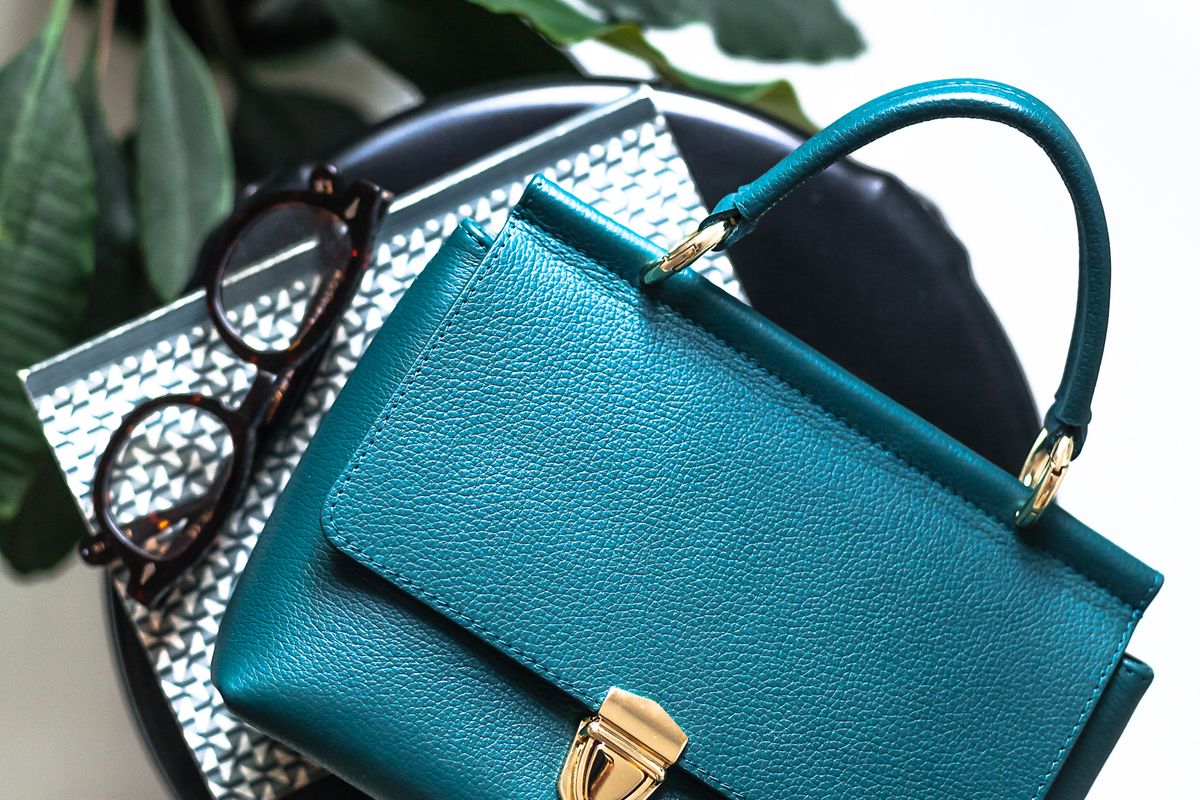
Structured Top-Handle Bags That Hold Their Shape
Updated Sep 26, 2026 · Read more →